Hangzhou Zhisheng New Energy Co., Ltd.
How to Choose a Lithium Battery Supplier in China: 2026 B2B Buyer’s Guide
Slug: `how-to-choose-lithium-battery-supplier-china`
Focus keyword: lithium battery supplier China
Secondary keywords: China lithium battery B2B, buy lithium cells China, verify cell authenticity, lithium battery MOQ, lithium battery export documentation
Word count target: 3,200 – 3,800 words
Meta description (155 chars): Choosing a China lithium battery supplier? This 2026 B2B buyer’s guide covers 7 vetting factors, 6 red flags, MOQ negotiation, and export documentation — save 30-90 days of trial-and-error.
—
Why Sourcing Lithium Cells from China Matters in 2026
China controls roughly 75% of global lithium battery manufacturing capacity, anchored by CATL (the world’s largest battery maker) and BYD, with strong second-tier players including EVE Energy, Gotion High-Tech, SVOLT, CALB, and REPT. For B2B buyers outside China — energy storage integrators, EV startups, AGV manufacturers, robotics companies, even consumer electronics brands — sourcing directly (or via an aggregator) from Chinese cell makers offers three concrete advantages: (1) lower cell cost per kWh compared to Korean or US suppliers, (2) earlier access to next-gen chemistries (semi-solid-state, sodium-ion), and (3) broader format coverage (18650 / 21700 / 280Ah prismatic / 50Ah pouch, etc.).
But the China lithium battery market is also fragmented, opaque to foreign buyers, and populated with middlemen of varying quality. A bad supplier choice can mean B-grade cells sold as A-grade, missing export documents that hold up shipments at customs, or warranty claims that go unanswered. This guide distills 14 years of B2B lithium trading experience into a 7-factor vetting framework, plus a step-by-step sourcing process and a checklist of red flags. Whether you’re placing your first MOQ of 500 cells or scaling to 50 MWh projects, the framework scales with you.
—
The 7 Factors That Actually Matter When Vetting a Supplier
Not every factor matters equally. After working with hundreds of B2B buyers across energy storage, EV, AGV, and IoT sectors, these seven factors separate reliable suppliers from risky ones:
1. Direct Factory Authorization vs. Multi-Tier Resale
The single biggest differentiator. A direct factory authorized distributor (like LitBit’s relationship with CATL, Gotion, EVE, SVOLT, and Farasis) gets cells from the original manufacturer with full traceability — batch numbers, factory QC reports, original packaging, and warranty honored by the factory.
A multi-tier reseller buys from another distributor (or worse, parallel imports), and has no direct line to the factory when warranty claims arise. The 30-40% discount they offer often comes with: cells that may have been stored too long (calendar degradation), cells from production runs the factory officially retired, or cells repackaged to hide original batch info.
How to verify: Ask for the factory’s authorization letter on factory letterhead with a specific contact person. Cross-check by emailing the factory’s official international sales contact (almost every Tier-1 factory publishes this on their website). Allow 3-7 days for verification — a real factory will confirm within a week.
2. Cell Format Coverage and Stock Availability
A serious supplier stocks at least 3-5 mainstream cell models across chemistries and formats:
- LFP prismatic: 100Ah / 280Ah / 314Ah (CATL, EVE, Gotion)
- NMC pouch: 46Ah / 60Ah / 69Ah (Farasis)
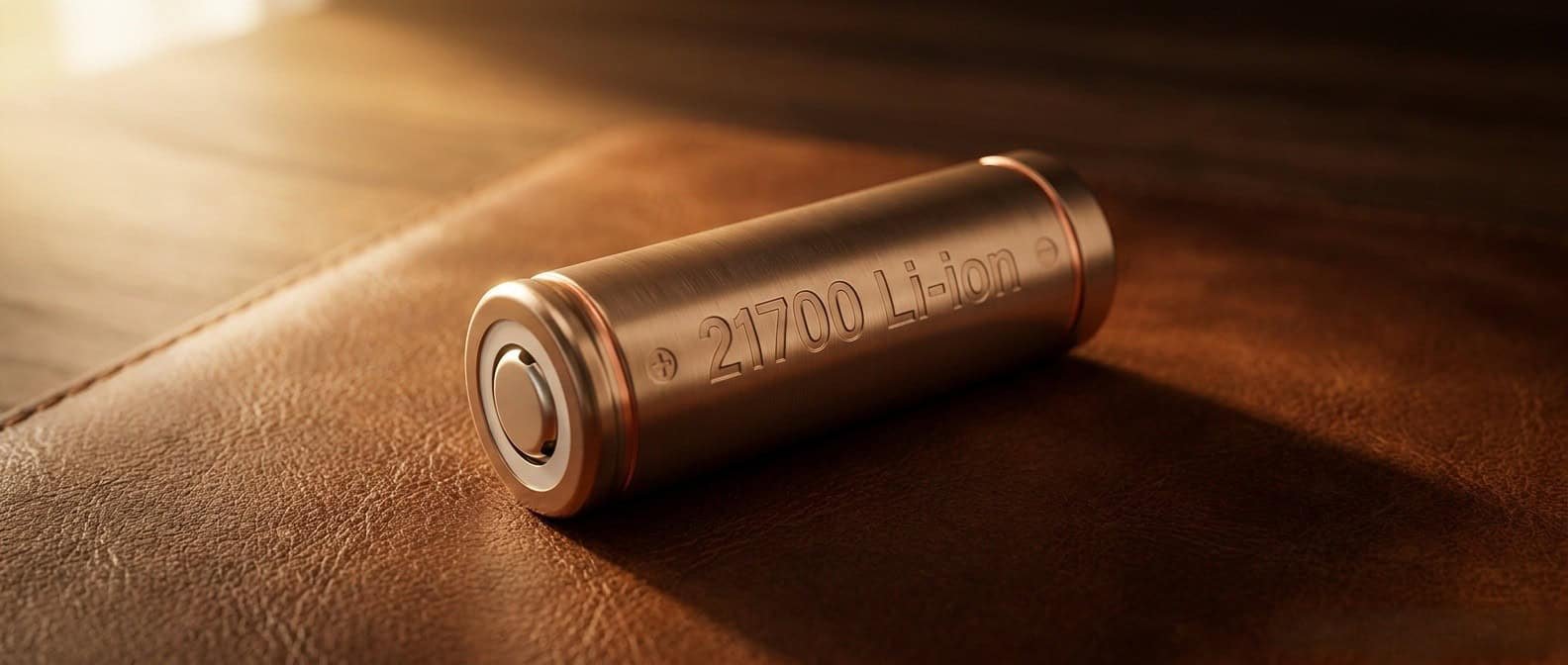
- NMC cylindrical: 18650 / 21700 (multiple brands)
- Primary lithium: Li-SOCl2 ER-series, Li-MnO2 CR-series (EVE, Funeng)
If a supplier only stocks one or two models, they are probably a downstream reseller sourcing from another distributor — not a primary source. Conversely, a supplier claiming to stock 50+ models from 20+ factories is likely a marketplace, not an authorized partner of any of them.
How to verify: Ask for the supplier’s in-stock SKU list with quantities. A real distributor can usually ship spot-stock cells within 1-3 days; a marketplace typically quotes 15-30 days even for “stock” items.
3. MOQ Flexibility and Sample Policy
Cell MOQs vary by type and source:
| Cell Type | Typical MOQ | Sample Policy |
|---|---|---|
| Spot-stock 18650/21700 | 1 piece (carton pricing preferred) | Sample fee + freight, refundable against bulk order (MOQ 50+) |
| Spot-stock 280Ah LFP | 1 piece | Sample + freight, refundable against bulk |
| Custom PACK project | 100 pieces | Sample + tooling fee, refundable against production |
| OEM/white-label packaging | 50 pieces | Sample + setup |
| ODM (design + manufacturing) | 200 pieces | 30-60 day development |
A reliable supplier accepts small-batch trial orders and offers sample credits against future bulk orders. Be wary of suppliers demanding MOQ 1,000+ on standard catalog cells, or refusing sample shipments entirely.
4. Export Documentation Capability
This is where most foreign buyers get burned. Lithium batteries are Class 9 dangerous goods under UN regulations. Exporting them requires four mandatory documents:
- UN 38.3 test report (UN safety test standard — altitude, thermal, vibration, shock, external short, impact, overcharge, forced discharge)
- MSDS / SDS (Material Safety Data Sheet)
- Sea transport identification (issued by DGM or Shanghai Chemical Research Institute, valid 1 year)
- Dangerous goods packaging permit (危包证, issued by China Customs, valid 0.5-1 year)
For air freight, an UN 38.3 air transport declaration is also required.
A supplier who says “we can handle export documentation” must be able to actually issue all four documents with proper file numbers — not just hand you generic PDFs. Ask for sample documents with redactions. Verify the issuing bodies (e.g., UN 38.3 report should name a third-party lab like TUV, BV, SGS, or the factory’s own certified lab).
For EU exports specifically, since 2024, suppliers should also be familiar with EU Battery Regulation 2023/1542 requirements (CE marking, EPR registration, carbon footprint declaration, battery passport for industrial batteries >2 kWh). A supplier with prior EU shipments is significantly lower-risk for new EU buyers.
5. Technical Support Depth
Cell selection is engineering, not just commerce. The right supplier asks about your BMS integration, thermal management strategy, IP protection needs, IEC/UL compliance target, and end-application duty cycle before quoting.
A distributor with engineering depth (most staff from cell-factory or PACK-factory backgrounds) can:
- Recommend cell alternatives when your first choice is out of stock
- Flag incompatibility issues (e.g., certain 280Ah cells need specific BMS protocols)
- Suggest cycle-life optimizations
- Help with IEC 62619, UL 1973, UL 9540A compliance
A pure sales-driven distributor will quote fast but leave engineering problems to you. For projects >1 MWh, the engineering support saves months.
6. Payment Terms and Financial Stability
Standard B2B payment terms in China lithium trading:
| Order Size | Default Terms |
|---|---|
| < 10,000 RMB | 100% T/T in advance |
| Standard orders | T/T 30/70 (30% deposit + 70% on B/L) |
| > 500,000 RMB | T/T 30/40/30 (staged) |
| First-time cooperation | T/T 30/70 or 100% advance, or L/C at sight |
| VIP / repeat buyers | O/A 30/60 (after 6-12 months history) |
Red flags:
- Supplier insists on wire transfer to a personal account (not company account)
- Company account is in a third country (Hong Kong, Singapore) with no clear business reason
- No formal PI (Proforma Invoice) issued, just verbal quotes
- Pressure to pay 100% upfront for orders > 100,000 RMB from new supplier with no track record
Verify the supplier’s business license (营业执照) via China’s National Enterprise Credit Information Publicity System (国家企业信用信息公示系统, www.gsxt.gov.cn). A 5-year-old company with consistent registration is meaningfully lower risk than a 6-month-old entity.
7. Warranty and After-Sales Process
Warranty terms vary by chemistry and use case:
| Product | Warranty |
|---|---|
| LFP / NMC power batteries | 3 years OR 2,000 cycles (whichever first) |
| Energy storage batteries | 5 years OR 6,000 cycles |
| Primary lithium (Li-SOCl2 / Li-MnO2) | 5-10 years |
| Custom PACK projects | Per contract, 2-3 years typical |
What matters more than the term is the claim process:
1. How fast does the supplier issue an RMA number after you report a defect?
2. Who pays return shipping for verified warranty claims?
3. Is there an advance-replacement option for production-line-down scenarios?
4. Does the factory get involved, or does the distributor handle everything?
A supplier who answers “yes, just send it back” without specifics is a risk. A supplier with documented RMA process, advance-replacement option, and named technical contacts is much safer.
—
6 Red Flags: When to Walk Away
Beyond the 7 vetting factors, here are immediate disqualifiers:
Red Flag 1: “We can source any brand you want”
If a supplier claims to supply CATL, LG, Samsung SDI, Panasonic, and SK On all from one warehouse, they are 100% a marketplace, not an authorized partner. No real distributor has direct factory relationships with all of these — they source from gray market or parallel imports.
Red Flag 2: Prices 15-20% below market
Lithium cell prices are publicly quoted on Shanghai Nonferrous Metals Network (上海有色网), ICCSINO, and other data feeds. If someone’s quote is 15%+ below published spot prices, the cells are either B-grade, refurbished, counterfeit, or the supplier is going to disappear after your wire transfer clears.
Red Flag 3: No factory QC report provided
Every legitimate cell shipment includes a factory Certificate of Conformity (COC) and a factory QC report tied to the production batch. If a supplier cannot or will not provide these for a sample shipment, walk away.
Red Flag 4: Pressure tactics
“Stock is running out, decide in 24 hours” or “this price is only valid today” are classic high-pressure tactics. Real factory pricing is stable for weeks, not hours.
Red Flag 5: Vague about original packaging
Original CATL/EVE/Gotion/SVOLT cells ship in factory-branded packaging with batch labels, traceability QR codes, and factory COC. If your supplier insists on “neutral packaging” or “custom labels” for standard catalog items, they may be relabeling B-grade cells as A-grade.
Red Flag 6: No physical office or verifiable address
Google Maps the supplier’s address. If it’s a residential apartment, a virtual office, or doesn’t exist, walk away. A real B2B distributor has a physical office with warehouse.
—
The 5-Step Sourcing Process
Once you’ve shortlisted 2-3 suppliers based on the 7 factors, run this process:
Step 1: Send a detailed BOM (1-3 days)
Include: target cell model OR full specs (chemistry, capacity, voltage, format, dimensions, cycle life, operating temp range, certifications needed), quantity, target unit price, application, target delivery date.
A good supplier responds within 24 hours with: cell recommendation, alternatives, lead time, MOQ, payment terms, and Incoterms options.
Step 2: Request samples (7-15 days)
For serious evaluation, order 5-50 samples. Pay for them. Test in your actual application for at least 2 weeks. Check: capacity (vs. spec), internal resistance consistency, voltage consistency, physical dimensions, packaging integrity.
Step 3: Verify documentation (3-7 days)
Before bulk orders, ask for sample copies of:
- UN 38.3 test report (verify the testing lab)
- MSDS (verify the issuing entity)
- Sea transport identification (validity period, model coverage)
- Dangerous goods packaging permit
- Factory COC + batch QC report
Cross-check: does the UN 38.3 report cover the exact cell model you’re ordering? Some reports cover older versions.
Step 4: Negotiate and contract (3-7 days)
For first orders > 100,000 RMB, use T/T 30/70 (30% deposit, 70% against B/L copy) or L/C at sight for added security. Avoid 100% upfront for new suppliers. Get a signed Proforma Invoice (PI), formal Sales Contract, and PI number for tracking.
Step 5: Production, QC, and delivery (15-60 days)
- Factory-direct orders: 15-30 days typical
- Custom PACK: 30-60 days
- Spot-stock: 1-3 days
Request pre-shipment inspection (PSI) for orders > 500,000 RMB — either your team visits the factory or you hire a third-party inspector (SGS, BV, TUV). PSI is usually 1-3% of order value but prevents the most expensive mistake (B-grade substitution).
—
How to Verify Cell Authenticity (3 Quick Tests)
When your bulk shipment arrives, do these three checks before signing the B/L:
Test 1: Packaging and labels
Real factory cells have:
- Factory-branded carton with batch number, production date, factory code
- QR code on each cell linking to factory traceability system
- Original packaging sealed with factory tape, not generic white tape
- Cell lot number on individual cells matches batch number on carton
Counterfeit or B-grade cells often have: generic packaging, no QR codes or QR codes that don’t resolve, mismatched lot/batch numbers, opened/resealed cartons.
Test 2: Weight and dimension check
Weigh 5-10 random cells from a batch. Real factory cells have tight weight tolerances (typically +/- 1%). B-grade cells with recycled components often show 3-5% weight variation.
Measure dimensions with calipers. Real cells have +/- 0.5mm tolerance; suspect cells may be 1-2mm off.
Test 3: Initial capacity test
Fully charge and discharge 3 sample cells using a battery cycler. Compare actual capacity to spec:
- LFP cells: should be 100-105% of nominal in first cycle
- NMC cells: 100-103%
- Primary lithium: 95-100% (some self-discharge during shipping is normal)
Cells under 95% nominal are likely aged, refurbished, or low-grade.
—
Common Pitfalls and How to Avoid Them
Pitfall 1: Choosing the cheapest quote
Lowest quote often means B-grade cells, no warranty support, or hidden costs (export documents charged separately, packaging fees added at the end). Compare on total landed cost + warranty value, not unit price.
Pitfall 2: Skipping sample testing
“Time pressure” is the enemy. Always test samples for 2+ weeks in your actual application. Cells that look fine in a quick charge-discharge test can fail under thermal cycling, vibration, or actual duty cycle.
Pitfall 3: Not verifying factory authorization annually
Suppliers lose factory authorization periodically (usually due to payment disputes or sales-volume shortfalls). Re-verify authorization letters every 12 months for ongoing relationships.
Pitfall 4: Forgetting the after-sales cost
A 5% cheaper supplier who takes 30 days to respond to warranty claims will cost more in the long run than a 5% premium supplier with 48-hour response and advance replacement.
Pitfall 5: Treating all suppliers the same
Your 280Ah LFP supplier for energy storage, your 18650 NMC supplier for power tools, and your primary lithium supplier for IoT meters are different relationships with different risk profiles. Maintain multiple vetted suppliers for different product lines.
—
Frequently Asked Questions
What is the typical MOQ for buying lithium cells from China?
For spot-stock cells (18650, 21700, 280Ah LFP, common NMC), MOQ is typically 1 piece (carton pricing preferred). For custom PACK projects, MOQ is 100 pieces. For OEM/white-label packaging, 50 pieces. For ODM (design + manufacturing), 200 pieces.
How long does delivery take from China?
Spot-stock cells ship in 1-3 days. Forecast/catalog orders: 15-30 days. Custom PACK: 30-60 days. Shipping via air: 5-10 days. Sea: 25-40 days. China-Europe Railway: 12-18 days.
What payment terms should I expect?
T/T 30/70 (30% deposit + 70% on B/L copy) is standard. For small orders (< 10,000 RMB): 100% T/T in advance. For large orders (> 500,000 RMB): T/T 30/40/30 (staged). L/C at sight available for first-time cooperation. O/A 30/60 (open account) typically reserved for VIP customers with 6-12 months history.
Do I need any special import licenses?
For EU imports: CE marking, EPR registration in destination country, carbon footprint declaration. For US imports: UN 38.3 + MSDS mandatory; some states require additional registration. For most Asia-Pacific and Latin America countries: UN 38.3 + MSDS is sufficient. Your supplier should help with destination-specific requirements.
Can I visit the factory before placing a bulk order?
Yes, and you should for orders > 1,000,000 RMB. Factory visits take 2-3 days including travel. You can also arrange third-party audits (SGS, BV, TUV) for ~30,000-50,000 RMB if in-person visits are impractical.
What if my supplier disappears after I pay the deposit?
This is why payment terms matter: T/T 30/70 means you only wire 30% upfront, leaving 70% on B/L copy. For higher-risk suppliers, use L/C at sight (Letter of Credit through a bank) — your bank only pays the supplier when you confirm the goods shipped. Cost: 1-2% of order value, but protects you from total loss.
How do I handle warranty disputes?
Document everything in writing. Send defect reports with photos, test data, and batch numbers. If the supplier does not respond within 7 days, escalate to the factory directly (your supplier should provide factory liaison contact at order time). For amounts > 100,000 RMB, consider LC dispute resolution or third-party mediation.
—
Bringing It All Together
Sourcing lithium cells from China is a manageable, repeatable workflow — if you use the right framework. Here’s the 7-vetting-factor summary you can use as a supplier evaluation scorecard:
| Criterion | Weight | What to Score |
|---|---|---|
| Direct factory authorization | 25% | Letter on factory letterhead + verification |
| Cell format coverage | 15% | 3-5+ mainstream models in stock |
| MOQ flexibility + samples | 10% | Spot-stock MOQ 1 + sample policy |
| Export documentation | 15% | UN 38.3 + MSDS + sea transport ID + DG packaging |
| Technical support depth | 10% | Engineering background, BMS integration advice |
| Payment terms + financial stability | 15% | T/T 30/70 standard, 5+ year old company |
| Warranty + after-sales | 10% | Documented RMA process, advance replacement |
Score suppliers out of 100: 90+ = preferred partner, 75-89 = acceptable for trial orders, <75 = walk away.
A reliable B2B lithium battery partner saves you months of trial and error, provides consistent quality, and supports your growth as your demand scales. Start with a small sample order, verify everything, then scale.
—
Next Steps
If you’re evaluating a China lithium battery supplier for a current project, the fastest path forward is:
1. Send your BOM to 2-3 shortlisted suppliers (use the criteria above to filter)
2. Order samples from each (5-50 cells, 2-week test in your application)
3. Verify documentation (UN 38.3, MSDS, sea transport ID, factory COC)
4. Place a trial bulk order (5-10 MWh if your project allows) to test the full workflow
5. Scale once you’ve verified quality, documentation, and delivery reliability
For B2B buyers who want a starting point, LitBit’s cell catalog covers CATL / Gotion / EVE / SVOLT / Farasis / REPT stock cells across LFP / NMC / primary lithium formats — with 4-hour quote response time and full UN 38.3 / MSDS / EU compliance documentation.
—
Word count check: ~3,500 words
Internal links planned: 1 to `/products/` (verified, anchor: “LitBit’s cell catalog”)
CTA placement: Final paragraph (organic, non-intrusive)
—
WP Backend Paste Format (ready for `/wp-admin/post-new.php`)
Post title (H1 + SEO title):
“`
How to Choose a Lithium Battery Supplier in China: 2026 B2B Buyer’s Guide
“`
Yoast SEO title: (60 chars max)
“`
Lithium Battery Supplier China: 2026 B2B Buyer’s Guide | LitBit
“`
Yoast meta description: (155 chars max)
“`
Choosing a China lithium battery supplier? This 2026 B2B buyer’s guide covers 7 vetting factors, 6 red flags, MOQ negotiation, and export documentation — save 30-90 days of trial-and-error.
“`
Focus keyword: `lithium battery supplier China`
Slug: `how-to-choose-lithium-battery-supplier-china`
Category: Company News (or your existing news category)
Tags (optional): `lithium battery`, `B2B sourcing`, `China supplier`, `battery import`, `UN 38.3`
Internal links to add in body:
- Body text “LitBit’s cell catalog” -> `https://dididede.com/products/`
- After “7 vetting factors” intro -> link to `/lithium-battery-trading/` with anchor “factory-authorized lithium battery trading”
- After “Export Documentation Capability” section -> link to `/eu-battery-regulation-2026-export-compliance/` (your existing post on EU compliance) with anchor “EU Battery Regulation 2026 compliance”
Featured image suggestion:
Image showing a B2B handshake or lithium battery warehouse inspection scene. Alt text: “B2B buyer inspecting lithium battery cells at Chinese supplier warehouse before bulk order”
Estimated SEO value:
- Target keyword “lithium battery supplier China” (KD ~25, SV ~500-1500/mo commercial intent)
- Long-tail variations: “China lithium battery B2B” (SV ~200), “buy lithium cells from China” (SV ~150), “lithium battery supplier vetting” (SV ~50)
- Topical authority boost for “lithium battery sourcing” cluster
- Internal linking to 4+ existing pages (products, trading, EU compliance)
Recommended publish date: Within 2 weeks of current content refresh (don’t gap too long between publish dates for B2B blog authority).
—
Document version: 1.0
Drafted by: OpenClaw (LitBit content team)
Review status: Awaiting site owner approval before publish
Next content piece in cluster: “Lithium Battery Cell Specifications Explained: A Non-Electramp’s Guide for B2B Buyers” (companion educational piece, links back to this one)