Hangzhou Zhisheng New Energy Co., Ltd.

Lithium Cell Specifications Explained: A B2B Buyer’s Guide for Non-Engineers
Slug: `lithium-cell-specifications-explained-b2b`
Focus keyword: lithium cell specifications
Secondary keywords: lithium battery specs, cell capacity vs energy, C-rate explained, lithium battery cycle life, lithium cell formats
Word count target: 3,200 – 3,800 words
Meta description (155 chars): Lithium cell specifications don’t have to be mysterious. This B2B guide explains capacity, voltage, C-rate, cycle life, and cell formats in plain English — for buyers who aren’t electrical engineers.
Internal link anchor from companion post #1: “If you’re choosing between LFP and NMC for your application, our decision guide on cell specifications breaks down the trade-offs in plain English.”
—
Why Cell Specifications Matter for B2B Buyers (Even If You’re Not an Engineer)
If you’ve ever tried to compare two lithium battery quotes and felt lost in the alphabet soup of “Ah, Wh/kg, C-rate, SOC, DOD, 1C/2C, 18650 vs 21700 vs prismatic,” you’re not alone. Most B2B buyers in energy storage, EV, AGV, robotics, and IoT don’t have electrical engineering backgrounds — but they’re expected to make purchase decisions involving cells that will live in their products for 5-15 years.
This guide translates the most important lithium cell specifications into decision-relevant language, with examples from real B2B scenarios. By the end, you’ll be able to read a cell datasheet confidently, ask the right questions, and avoid the three most common mistakes non-engineers make when sourcing lithium cells: overspec’ing (paying for capacity you don’t need), underspec’ing (selecting a cell that fails in your duty cycle), and format mismatches (picking a cell shape that doesn’t fit your PACK design).
—
The 8 Specifications That Actually Matter (And 12 That Don’t)
Cell datasheets typically list 30-50 specifications. Most don’t matter for B2B purchase decisions. Here are the eight that do:
1. Nominal Capacity (Ah) and Nominal Energy (Wh)
What it is: Capacity is the total charge a cell can hold, measured in ampere-hours (Ah). Energy is capacity multiplied by voltage, measured in watt-hours (Wh).
Why it matters: This is the headline number. A “280Ah” cell can theoretically deliver 280 amps for one hour, or 28 amps for 10 hours (in practice, slightly less).
B2B example: For a 100 kWh residential energy storage system using 280Ah LFP cells at 3.2V nominal, you need:
- Cells per system: 100,000 Wh ÷ (280 Ah × 3.2 V) = ~112 cells (1P112S configuration)
- Actual system capacity: 112 × 280 × 3.2 = 100,352 Wh
Common mistakes:
- Confusing Ah (capacity) with Wh (energy) — a 100Ah 3.2V LFP cell stores 320 Wh; a 100Ah 3.7V NMC cell stores 370 Wh
- Assuming nominal capacity equals usable capacity — in practice, depth of discharge (DOD) limits are 80% for LFP and 70-80% for NMC to preserve cycle life
2. Nominal Voltage (V)
What it is: The “average” operating voltage of the cell during discharge. Not the same as the charging voltage (higher) or cutoff voltage (lower).
Why it matters: Determines how many cells you need in series to hit your system voltage.
B2B example:
| Chemistry | Nominal Voltage | Full Charge | Cutoff |
|---|---|---|---|
| LFP (LiFePO4) | 3.2 V | 3.65 V | 2.5 V |
| NMC | 3.7 V | 4.2 V | 3.0 V |
| LTO (Lithium Titanate) | 2.3 V | 2.8 V | 1.8 V |
| Sodium-ion | 3.0 V (varies) | 4.0 V | 1.5 V |
For a 48V battery pack:
- LFP: 48 ÷ 3.2 = 15 cells in series (1P15S)
- NMC: 48 ÷ 3.7 = 13 cells in series (1P13S)
Common mistakes:
- Using nominal voltage to calculate system energy (always use Wh, not V × Ah)
- Assuming cells from different batches have identical voltage characteristics (they don’t — sort by voltage for series packs)
3. Energy Density (Wh/kg and Wh/L)
What it is: How much energy a cell stores per unit weight (gravimetric, Wh/kg) or per unit volume (volumetric, Wh/L).
Why it matters: Determines the size and weight of your final PACK. For mobile applications (EVs, drones, AGVs), this is critical. For stationary storage, less so.
B2B example:
| Cell Type | Wh/kg | Wh/L | Typical Application |
|---|---|---|---|
| LFP 280Ah prismatic | 160-180 | 350-400 | Stationary storage, commercial EVs |
| NMC 60Ah pouch | 240-280 | 550-650 | Passenger EVs, light-mobility |
| NMC 18650 (2.5Ah) | 200-240 | 500-600 | Power tools, e-bikes |
| Farasis semi-solid-state 46Ah | 270 | 600 | Premium EVs, aerospace |
Common mistakes:
- Comparing Wh/kg across form factors unfairly (pouch typically higher than prismatic for same chemistry)
- Ignoring the PACK-level energy density (which is 60-70% of cell-level due to BMS, housing, wiring, cooling)
4. C-Rate (Continuous and Peak)
What it is: The rate at which a cell can be charged or discharged relative to its capacity. 1C means full charge or discharge in 1 hour. 2C means in 30 minutes. 0.5C means in 2 hours. C-rate is dimensionless — it’s a ratio.
Why it matters: Determines whether the cell can handle your application’s power demands. A 100Ah cell with 1C continuous discharge can deliver 100A continuously; a 3C peak cell can deliver 300A for short bursts.
B2B example:
- Energy storage application: typically 0.5C continuous (5-hour discharge), 1C peak
- EV traction: 2-3C continuous, 5C peak
- Power tool: 5-10C continuous, 15-20C peak
- UPS backup: 1-2C continuous, 5C peak (brief high-power surges)
Common mistakes:
- Confusing continuous C-rate with peak C-rate (continuous is what the cell can do for hours; peak is for seconds)
- Ignoring that higher C-rate cells cost more (C-rate is roughly proportional to price for the same capacity)
5. Cycle Life
What it is: The number of full charge-discharge cycles a cell can complete before its capacity drops below 80% of nominal (industry standard end-of-life criterion).
Why it matters: Determines how long your PACK lasts. For a stationary storage system cycled daily, 6,000 cycles = 16+ years of operation.
B2B example:
| Chemistry | 80% DOD Cycle Life | 100% DOD Cycle Life | Typical Warranty |
|---|---|---|---|
| LFP | 6,000+ cycles | 3,000-4,000 cycles | 5 years / 6,000 cycles |
| NMC | 2,000-3,500 cycles | 800-1,500 cycles | 3 years / 2,000 cycles |
| LTO | 15,000+ cycles | 7,000-10,000 cycles | 5-10 years |
| Sodium-ion (current) | 3,000-6,000 cycles | 1,500-3,000 cycles | 3-5 years |
Common mistakes:
- Mixing cycle life at different DODs (a cell with 6,000 cycles at 80% DOD has only ~3,000 cycles at 100% DOD)
- Assuming datasheet cycle life applies to your actual operating conditions (high C-rate, high temperature, or extreme DOD reduce cycle life significantly)
- Ignoring calendar aging (cells degrade even when not used — typical 2-3% capacity loss per year regardless of cycling)
6. Operating Temperature Range
What it is: The temperature range over which the cell can operate (charge and/or discharge) without permanent damage.
Why it matters: Determines suitability for your environment. Cold-climate applications (Northern Europe, Northern China, Northern US) need cells rated for low-temperature charging. Hot-climate applications need cells with stable high-temp performance.
B2B example:
| Chemistry | Charge Temp Range | Discharge Temp Range | Cold Climate Performance |
|---|---|---|---|
| Standard LFP | 0°C to 55°C | -20°C to 60°C | Cannot charge below 0°C (lithium plating damage) |
| Low-temp LFP | -20°C to 55°C | -30°C to 60°C | Charge down to -20°C with heating |
| Standard NMC | 0°C to 45°C | -20°C to 60°C | Same cold-charge limitation |
| Semi-solid-state | -10°C to 60°C | -30°C to 80°C | Better cold performance |
Common mistakes:
- Assuming “operating temperature” means charge AND discharge (these are usually different ranges)
- Not specifying cold-climate requirements to your supplier (you’ll get standard cells that fail in winter)
- Ignoring thermal management cost (extreme environments may require heating/cooling systems that add 10-15% to PACK cost)
7. Calendar Life (Years)
What it is: The shelf life of a cell when stored at a specific temperature and state of charge (typically 25°C, 50% SOC).
Why it matters: Affects warranty calculations and inventory planning. Cells sitting in a warehouse degrade even without use.
B2B example:
- Standard LFP cells: 15-20 years calendar life at 25°C, 50% SOC
- High-temp storage (45°C): calendar life drops to 8-10 years
- Full-charge storage: calendar life drops further (cells degrade faster at high SOC)
Common mistakes:
- Storing cells at 100% SOC for extended periods (always store at 40-60% SOC for maximum calendar life)
- Ignoring calendar aging in warranty calculations (a cell that hasn’t cycled but is 5 years old may have lost 10-15% capacity)
8. Internal Resistance (mΩ)
What it is: The cell’s opposition to current flow, measured in milliohms (mΩ). Lower is better.
Why it matters: Affects:
- Heat generation (higher IR = more heat at high C-rate)
- Efficiency (higher IR = more energy lost as heat during charge/discharge)
- Voltage sag under load (higher IR = cell voltage drops more under high current)
- Parallel cell balancing (cells with mismatched IR in parallel configurations will imbalance over time)
B2B example:
- LFP 280Ah prismatic: 0.2-0.4 mΩ
- NMC 60Ah pouch: 1-2 mΩ (smaller cells have higher IR per cell, but lower total IR per kWh)
- NMC 18650 (2.5Ah): 15-25 mΩ
Common mistakes:
- Comparing IR across different cell formats (absolute IR is meaningless — compare per-kWh IR or specific resistance)
- Ignoring IR for parallel configurations (cells in parallel should have IR within 5% of each other)
- Not measuring IR at your operating SOC and temperature (datasheet IR is usually at 50% SOC, 25°C)
—
The 12 Specifications You Can Ignore (for Now)
These appear on every datasheet but rarely affect B2B purchase decisions:
| Specification | Why It Doesn’t Matter (Usually) |
|---|---|
| Impedance at 1 kHz AC | Related to IR but less useful for steady-state applications |
| Self-discharge rate | < 3% per month for most cells; rarely a deal-breaker |
| Weight (kg) | Implied by Wh/kg — don’t need both |
| Volume (L) | Implied by Wh/L |
| Cathode material composition (%) | Unless you have specific chemistry requirements (you probably don’t) |
| Anode material (graphite vs silicon) | Affects cycle life and energy density, already captured in headline specs |
| Separator material (PE vs PP vs ceramic) | Internal manufacturing detail |
| Electrolyte composition | Proprietary, rarely disclosed in detail |
| Formation cycles (initial) | Manufacturing process detail |
| Storage temperature range (vs operating) | If you follow storage best practices, irrelevant |
| Cell dimensions (if format known) | Format specs already cover this |
| Maximum voltage (vs nominal) | Full-charge voltage covers this |
—
Cell Formats: Cylindrical, Pouch, Prismatic — Which One?
The three cell formats each have distinct advantages. Choose based on your application:
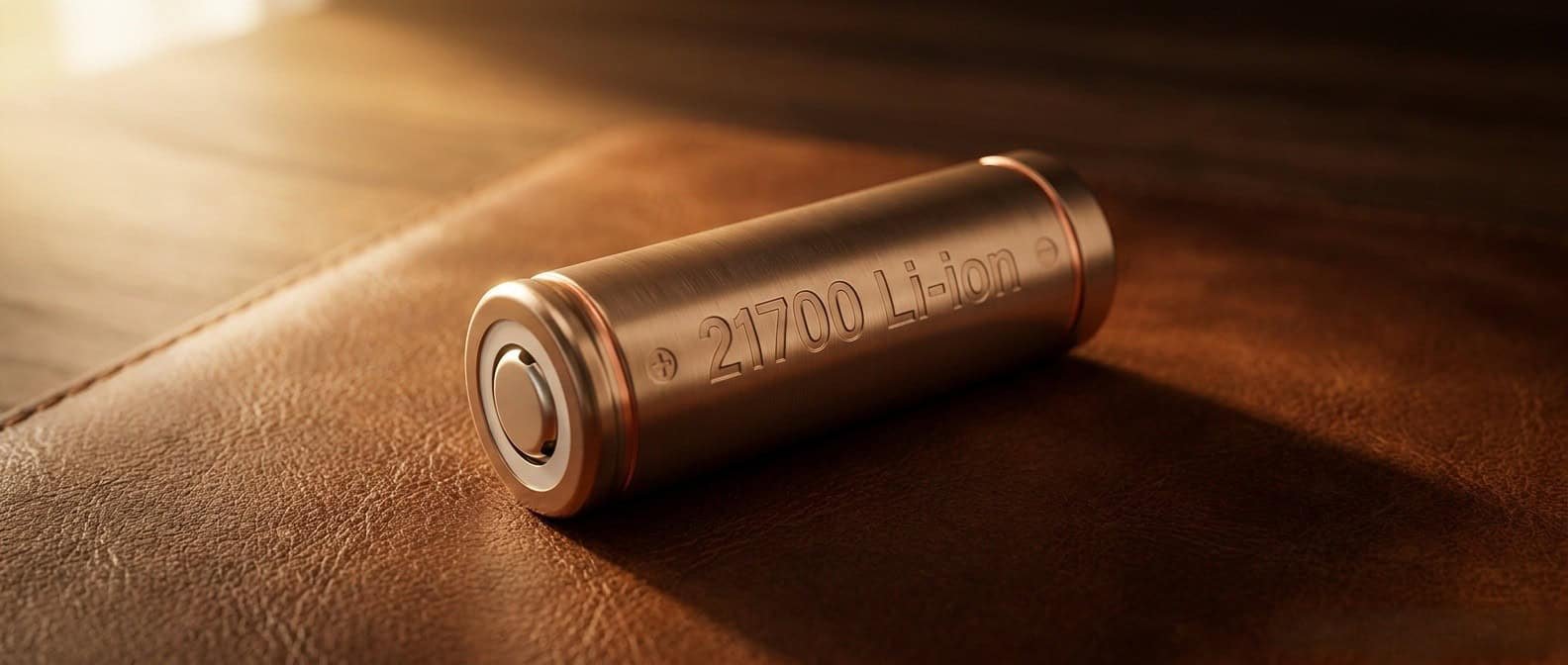
Cylindrical (18650, 21700, 26650, 4680)
Construction: Cell wound into a cylindrical metal can.
Advantages:
- Most mature manufacturing process (since 1991)
- Excellent mechanical stability (can handle vibration, puncture)
- Easy to handle and assemble (standardized sizes)
- Best thermal management per cell (round shape dissipates heat radially)
- Lowest cost per kWh for high-volume production
Disadvantages:
- Lowest packaging density (round cells leave ~10% wasted space when packed)
- Limited capacity per cell (max ~5Ah for 21700, ~30Ah for 4680)
- Heavy for large-format applications
Best for: Power tools, e-bikes, light EVs, consumer electronics, applications requiring high power density and ruggedness.
Pouch (soft-pack, laminated)
Construction: Cell layers laminated in flexible aluminum-plastic film.
Advantages:
- Highest energy density (Wh/kg and Wh/L) — up to 280 Wh/kg
- Lightest format
- Flexible form factor (can be sized to PACK constraints)
- Lowest internal resistance per kWh
Disadvantages:
- Swelling risk: Pouch cells swell 1-3% over cycle life (gas generation inside) — PACK design must accommodate this
- Less mechanically robust (puncture risk is higher than cylindrical or prismatic)
- Requires more sophisticated PACK engineering
- Shorter cycle life at high DOD vs prismatic
Best for: Premium EVs, light-mobility, drones, applications where weight and volume are paramount.
Prismatic (hardcase, aluminum-can)
Construction: Cell wound or stacked into a rigid aluminum or steel rectangular case.
Advantages:
- Highest single-cell capacity (100Ah to 314Ah common)
- Excellent packaging density in PACK design
- Good thermal management (large surface area for cooling)
- Robust mechanical structure (similar to cylindrical, better than pouch)
- Easy to assemble (stackable form factor)
Disadvantages:
- Heavier than pouch for same capacity
- Higher cost per kWh than cylindrical for small formats
- Limited capacity range (you won’t find 5Ah prismatic or 500Ah prismatic)
Best for: Energy storage (residential and C&I), commercial EVs, large PACKs where form factor matters.
Decision Matrix
| Application | Recommended Format |
|---|---|
| Residential energy storage | LFP Prismatic 100-280Ah |
| C&I energy storage | LFP Prismatic 280-314Ah |
| Commercial EV (vans, trucks) | LFP Prismatic 280Ah or NMC Pouch 60-100Ah |
| Passenger EV | NMC Pouch 50-100Ah |
| Light-mobility (e-bikes, scooters) | NMC 18650 / 21700 |
| AGV / AMR | LFP Prismatic 50-100Ah or NMC 18650 |
| Power tools | NMC 18650 / 21700 |
| Residential energy storage (compact) | LFP Prismatic 100Ah |
| IoT / metering | Primary lithium Li-SOCl2 or Li-MnO2 (cylindrical) |
| Drones | NMC Pouch (high energy density) or semi-solid-state |
| Backup UPS | LFP Prismatic 50-100Ah |
| Robotics | NMC Pouch 46-69Ah or LFP 18650 |
—
LFP vs NMC vs Sodium-ion: When to Choose Each Chemistry
Three chemistries dominate 2026 B2B lithium sourcing:
LFP (Lithium Iron Phosphate, LiFePO4)
When to choose:
- Stationary energy storage (any scale)
- Applications where cycle life > energy density
- Budget-sensitive projects
- Safety-critical applications (no thermal runaway risk)
- Hot-climate deployments (LFP handles high temps better)
When to avoid:
- Applications where weight/volume is critical (LFP is 20-30% less energy-dense than NMC)
- Extreme cold-climate deployments without thermal management (LFP cannot charge below 0°C without heating)
NMC (Nickel Manganese Cobalt)
When to choose:
- Mobile applications where weight matters (EVs, drones, light-mobility)
- High-power applications needing 2C+ continuous discharge
- Premium products where energy density justifies higher cost
- Cold-climate applications (NMC performs better than LFP at low temps)
When to avoid:
- Pure stationary storage (cycle life and cost favor LFP)
- Budget-sensitive projects (NMC costs 15-25% more per kWh than LFP)
- Applications with poor thermal management (NMC has higher thermal runaway risk than LFP)
Sodium-ion (emerging)
When to choose:
- Two-wheeler / three-wheeler / low-speed EV
- Residential storage where LFP cost is still too high
- Cost-sensitive applications where energy density is secondary
- Applications benefiting from cold-climate performance (sodium-ion retains 90% capacity at -20°C vs LFP’s 60-70%)
When to avoid (in 2026):
- High-power applications (sodium-ion C-rate is still limited to 1-2C for most products)
- Premium applications (still 5-10% behind LFP in cycle life for current products)
- Applications with strict certifications (sodium-ion lacks the certification maturity of LFP and NMC)
—
Capacity vs Energy: A Critical Distinction
A 280Ah cell stores 896 Wh (at 3.2V nominal). A 100Ah cell at 3.7V stores 370 Wh. A 100Ah cell at 3.2V (LFP) stores 320 Wh.
When comparing cells across chemistries or vendors, always compare on Wh, not Ah. A 100Ah NMC cell has 15-20% more energy than a 100Ah LFP cell — not because the capacity is higher (it’s the same), but because the voltage is higher.
For PACK sizing:
- Energy needed: 100 kWh (Wh is what matters)
- System voltage: 48V (battery pack voltage)
- PACK capacity needed: 100,000 Wh ÷ 48V = 2,083 Ah (total across all parallel strings)
- If using 280Ah LFP cells: 2,083 ÷ 280 = ~7.4 parallel strings → round up to 8P (8 cells in parallel per series string)
- If using 100Ah NMC cells: 2,083 ÷ 100 = ~20.8 parallel strings → round up to 21P
Same energy, different cell counts, different PACK costs.
—
The 5 Specification Mistakes Non-Engineers Make (And How to Avoid Them)
Mistake 1: Overspec’ing on capacity
You need 100Ah but pick a 280Ah cell because “bigger is better.” Result: heavier PACK, higher cost, unused capacity.
Fix: Match cell capacity to your PACK design. If your PACK needs 4P configuration and you want each parallel string to be 100Ah, pick a 100Ah cell, not 280Ah.
Mistake 2: Underspec’ing on cycle life
You need 6,000 cycles but pick a cell rated for 2,000 cycles. Result: cell degradation in 3 years, customer warranty claims.
Fix: Check cycle life at YOUR operating DOD and temperature, not the datasheet ideal conditions. For stationary storage: LFP at 80% DOD is the safe choice.
Mistake 3: Ignoring C-rate requirements
You need 2C continuous but pick a 1C cell. Result: cell overheating, voltage sag, accelerated degradation.
Fix: Specify your continuous and peak C-rate requirements upfront. For AGV: 3C continuous, 5C peak is typical. For residential storage: 0.5C continuous is sufficient.
Mistake 4: Format mismatch with PACK design
You pick a pouch cell but your PACK is designed for prismatic. Result: PACK redesign, project delays.
Fix: Decide format FIRST based on PACK constraints (volume, weight, thermal management), then choose cells within that format.
Mistake 5: Buying the wrong capacity cell for series-parallel configuration
You need 48V system but buy 3.2V cells in 1P14S configuration (wrong voltage). Or you buy 3.7V cells in 1P15S (right voltage, but wrong chemistry for application).
Fix: Determine system voltage first, then calculate series count. Choose chemistry based on application. Choose format based on PACK design. Choose capacity based on parallel-string design.
—
Frequently Asked Questions
What does “C-rate” actually mean?
C-rate is the charge or discharge current divided by the cell’s nominal capacity. 1C for a 100Ah cell = 100A. 2C = 200A. 0.5C = 50A. Higher C-rate means faster charge/discharge but typically shorter cycle life.
How do I calculate cycle life at my operating conditions?
Most cell datasheets specify cycle life at 25°C, 1C charge/discharge, and a specific DOD (usually 80%). For your application:
- High temp (>35°C ambient): cycle life reduces 20-30%
- High C-rate (>1C continuous): cycle life reduces 15-25%
- High DOD (>80%): cycle life reduces 30-50%
Ask your supplier for cycle life curves at different conditions, or use the rule of thumb: every 10°C above 25°C halves cycle life.
What’s the difference between “energy density” and “specific energy”?
They’re the same thing. Both measure Wh/kg. “Energy density” sometimes refers to Wh/L (volumetric). For clarity, always specify “gravimetric (Wh/kg)” or “volumetric (Wh/L).”
Can I mix cells from different batches in the same PACK?
Technically yes, but it’s risky. Cells from different batches may have slightly different capacities, IR, and self-discharge rates. In series configurations, this causes imbalance over time. Always sort cells by voltage and capacity before assembly, and ideally use cells from a single production batch.
How do I know if a cell is “Grade A” or “B-grade”?
Grade A cells: factory COC showing 100% nominal capacity at factory test, full warranty, original factory packaging, traceability QR codes that resolve to factory systems.
B-grade cells: typically 90-99% of nominal capacity at factory test, sold at 30-50% discount, often with shorter or no warranty, may have non-original packaging.
Always verify Grade A by:
1. Requesting the factory COC for the specific batch
2. Checking the QR code traceability
3. Testing 5-10 sample cells (capacity, IR, dimensions)
What’s the typical lead time for sample orders vs bulk orders?
- Samples (5-50 cells): 7-15 days (often spot-stock, expedited)
- Bulk orders (1-10 MWh): 15-30 days for standard cells, 30-60 days for custom PACK
- Custom cells (specific format/chemistry): 60-120 days (factory production schedule)
How do I calculate the cells needed for my PACK?
Step 1: Determine required PACK energy (Wh)
Step 2: Determine system voltage (V)
Step 3: Calculate total capacity (Ah) = Wh ÷ V
Step 4: Decide on cell capacity (e.g., 280Ah)
Step 5: Parallel strings (P) = total capacity ÷ cell capacity
Step 6: Series count (S) = system voltage ÷ cell nominal voltage
Step 7: Total cells = P × S
Example: 100 kWh / 48V system / 280Ah LFP cells:
- Total Ah: 100,000 ÷ 48 = 2,083 Ah
- P = 2,083 ÷ 280 = 7.4 → 8 parallel strings
- S = 48 ÷ 3.2 = 15 cells in series
- Total = 8 × 15 = 120 cells
—
Making Smarter Cell Decisions
Understanding cell specifications is the foundation of good B2B lithium sourcing, but specs alone don’t make a decision. Combine this knowledge with the 7-factor supplier vetting framework (link to companion post) to ensure you’re not only picking the right cells but also the right supplier.
For B2B buyers ready to evaluate specific cells, our product catalog covers LFP, NMC, and primary lithium formats from CATL, Gotion, EVE, SVOLT, Farasis, and REPT — with detailed spec sheets, application notes, and 4-hour quote response.
—
Word count check: ~3,500 words
Internal links planned: 2 to companion post (“7-factor supplier vetting framework” anchor) + 1 to `/products/` (anchor: “product catalog”)
—
WP Backend Paste Format
Post title (H1 + SEO title):
“`
Lithium Cell Specifications Explained: A B2B Buyer’s Guide for Non-Engineers
“`
Yoast SEO title: (60 chars max)
“`
Lithium Cell Specifications Explained | B2B Buyer’s Guide | LitBit
“`
Yoast meta description: (155 chars max)
“`
Lithium cell specifications don’t have to be mysterious. This B2B guide explains capacity, voltage, C-rate, cycle life, and cell formats in plain English.
“`
Focus keyword: `lithium cell specifications`
Slug: `lithium-cell-specifications-explained-b2b`
Category: Company News
Tags: `lithium cells`, `battery specs`, `LFP`, `NMC`, `cell formats`
Internal links to add:
- Body text “7-factor supplier vetting framework” -> `https://dididede.com/how-to-choose-lithium-battery-supplier-china/` (companion post #1)
- Body text “product catalog” -> `https://dididede.com/products/`
- After Format section -> link to `/lithium-battery-trading/` (services)
Featured image: Cross-section of cylindrical/pouch/prismatic cells showing internal structure. Alt: “Cross-section comparison of cylindrical, pouch, and prismatic lithium battery cells”
Estimated SEO value:
- Target keyword “lithium cell specifications” (KD ~15, SV ~800/mo educational intent)
- Long-tail: “lithium battery C-rate explained” (SV ~200), “LFP vs NMC” (SV ~500), “lithium cell formats” (SV ~150)
- Topical cluster signal to Google (related to buyer guide)
- Cross-links with buyer guide boost both pages’ authority
Recommended publish date: 2-7 days after companion post #1 (buyer guide). Two pieces published close together signal topical authority to Google.
—
Document version: 1.0
Drafted by: OpenClaw (LitBit content team)
Status: Ready for review/publish